
Budapest Airport is reinforcing its role as a major air cargo hub in Central and Eastern Europe, handling over 300,000 tonnes of cargo in 2024 and projected to approach 400,000 tonnes in 2025. This growth reflects strategic investments in infrastructure, enhanced operational standards, and expanding international connectivity.
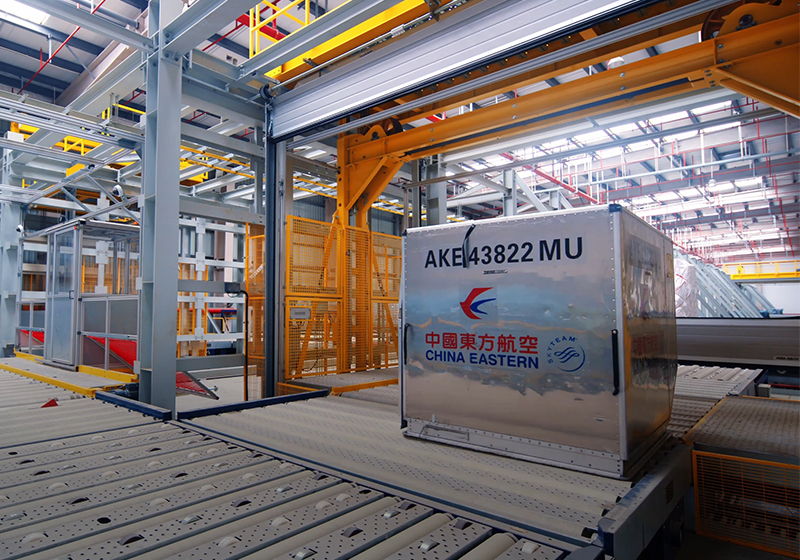
A key development driving this expansion is the completion of BUD Cargo City in 2022, a modern facility designed to manage high cargo volumes efficiently. The complex allows Budapest to compete with larger Western European airports while supporting growing freight flows from Asia, particularly China, and major international courier networks.
Operational excellence is a central focus. The airport’s IATA CEIV Lithium Batteries certification ensures safe handling of regulated cargo, including components for electric and conventional vehicles, a critical capability given the importance of the automotive sector to Hungary’s economy.
The rapid rise of e-commerce is another major growth driver, accounting for an increasing share of cargo volumes. Seasonal peaks, particularly in November and December, place additional pressure on capacity and freight rates, underscoring the importance of scalable and resilient logistics solutions.
Budapest’s location, combined with modern infrastructure and strong Asian connections, positions it as a key consolidation point for goods across Central and Eastern Europe. Ongoing investments in operational capabilities and technology will be essential to maintaining growth and balancing the diverse needs of e-commerce, industrial, and export-oriented cargo.
For logistics providers, the airport’s expansion translates into greater flexibility to support robust and efficient supply chains. Multimodal transport solutions, combining air, rail, and sea, enhance connectivity throughout the region, leveraging ports such as Koper, Constanța, and northern gateways like Gdańsk.
Further strengthening regional logistics, a 7,000 m² multifunctional facility in Budapest offers warehousing, cross-docking, distribution, co-packing, order fulfilment, road transport (LTL and FTL), and customs services. Located near the airport and major highways, the centre provides comprehensive end-to-end solutions for both domestic and international cargo flows.
With continued infrastructure development, expanding operational capabilities, and strategic connectivity, Budapest is steadily emerging as a central air cargo hub, linking Asian markets with Central and Eastern Europe while supporting resilient, efficient, and competitive supply chains.